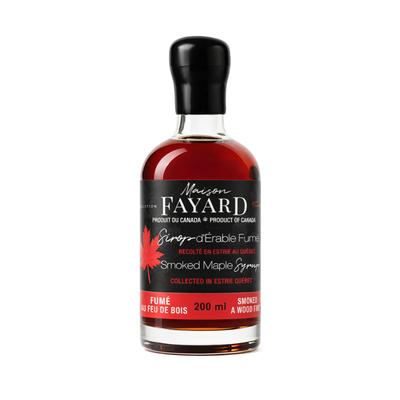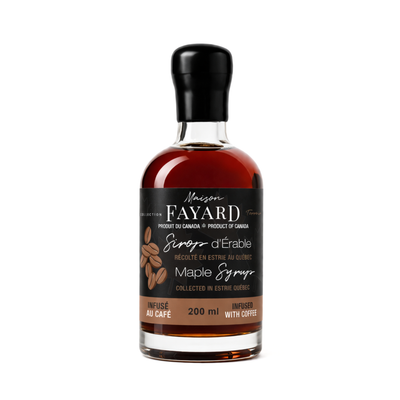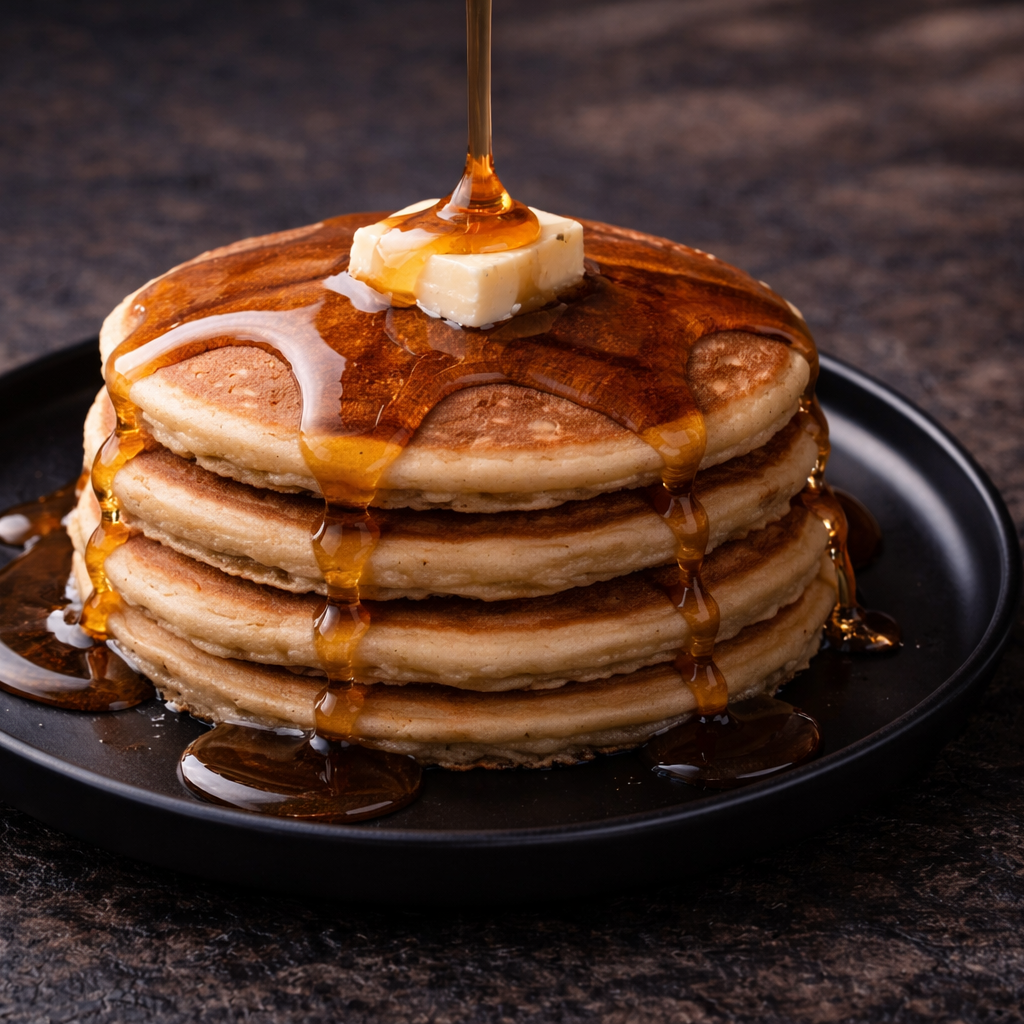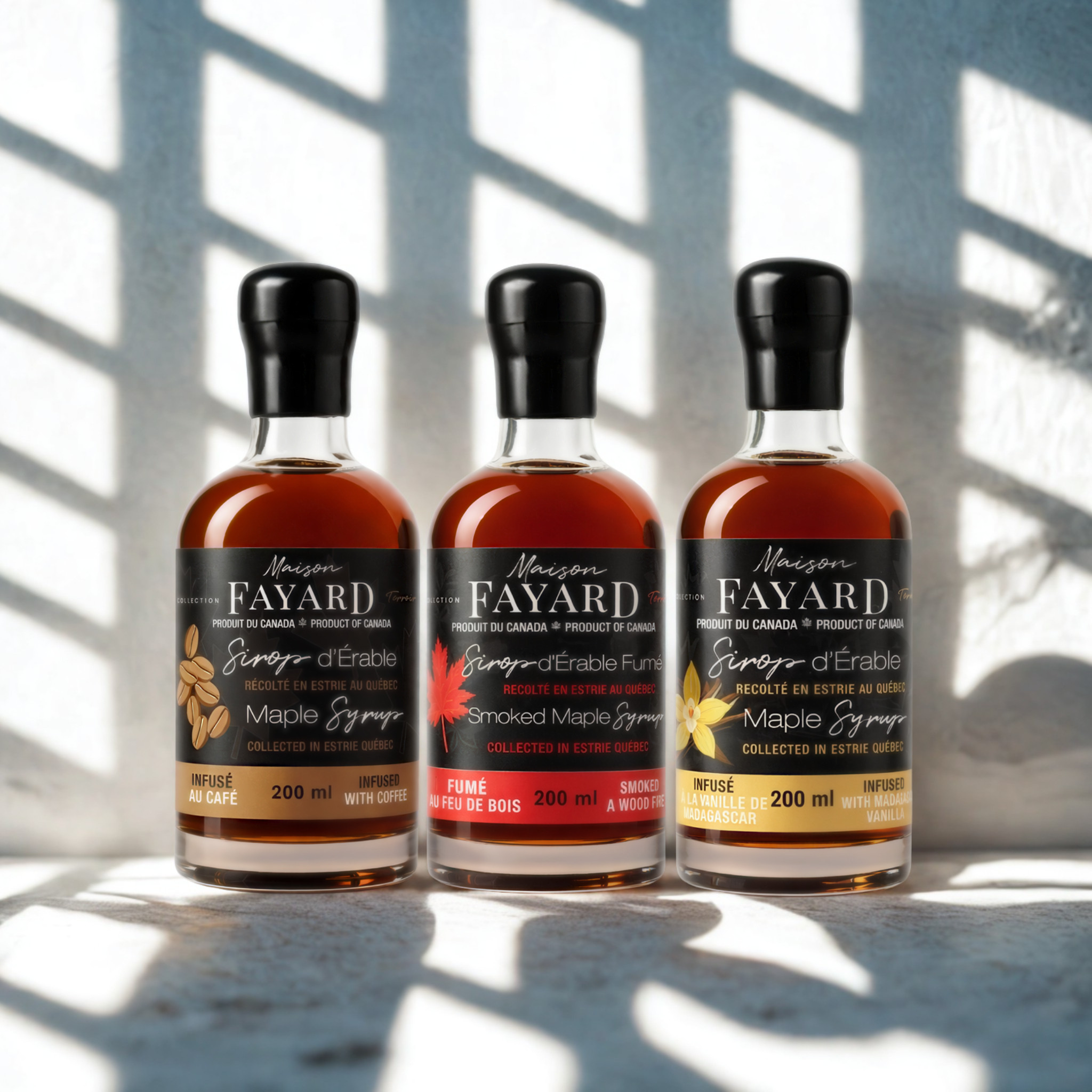
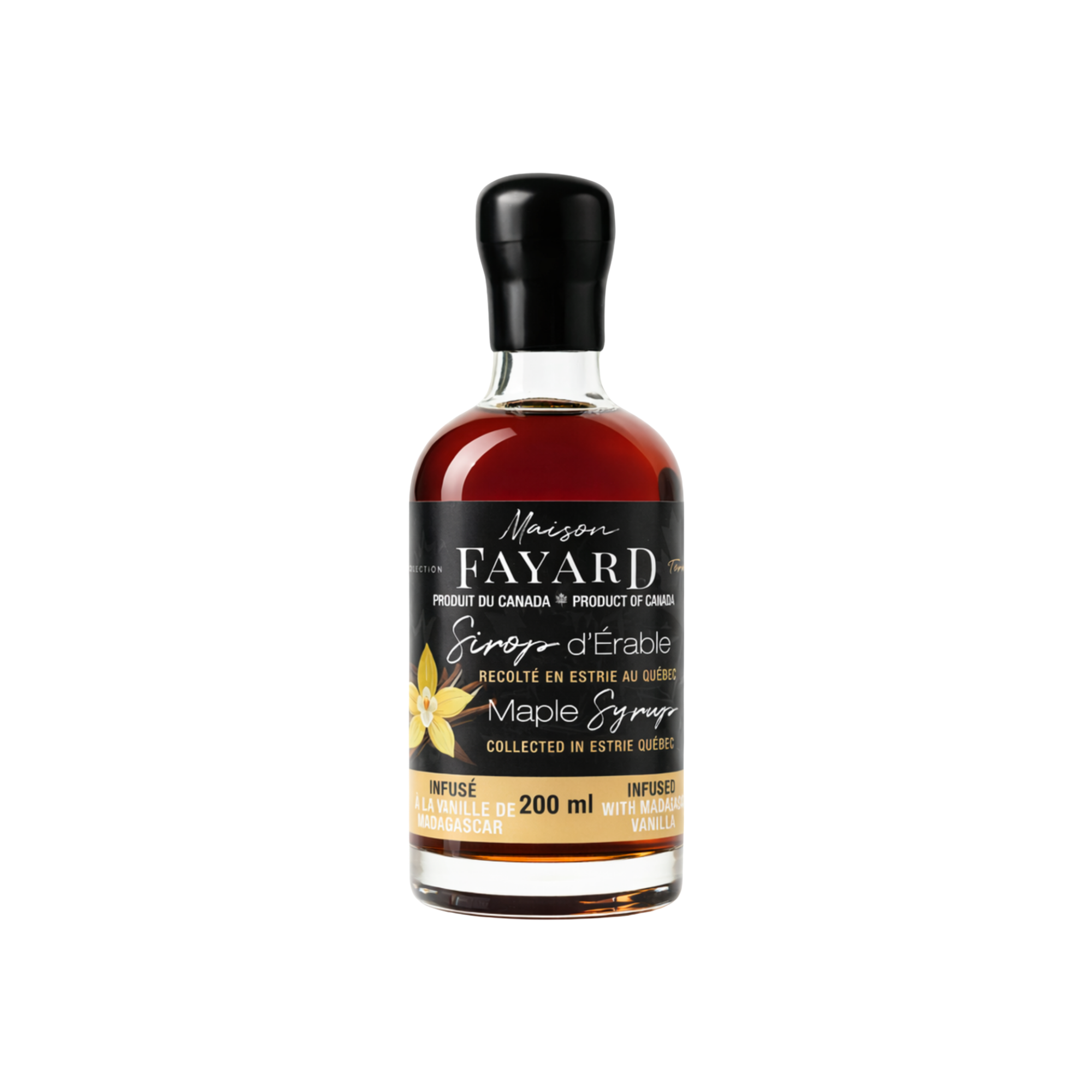

You only have to open a bottle of maple syrup to immediately sense something special: a warm, woody, lightly caramelized smell that evokes both the forest and winter cooking. What you perceive in a fraction of a second is the result of several weeks of work, a generous natural environment and know-how passed down for generations in Quebec. Understanding how this product is made means learning to appreciate it better, and to choose it better.
It all starts with the sugar maple
The sugar maple, Acer saccharum, is at the heart of production. It is the only species able to produce a sap concentrated enough in sucrose to give a quality syrup. It grows naturally in the forests of north-eastern North America, and Quebec is home to the largest concentration in the world. A maple must reach about forty years of age before being tapped, and can produce sap for more than a century if the tapping is done with care.
The sugaring season, a very narrow window
Sap flow is only possible for a few weeks a year, generally between late February and early April. This period, called the sugaring season, depends on a precise alternation between cold nights and mild days. When the temperature drops below zero at night and rises above it during the day, the sap starts moving in the tree and can be collected.
If temperatures stay too low or too high for a prolonged period, the season is compromised. It is a production intimately linked to weather conditions, which explains the variations from one year to the next in terms of volume and aromatic character.
Tapping: a precise gesture, respectful of the tree
The harvest begins with tapping. A small, shallow hole is drilled into the maple trunk, about a metre from the ground, and a spile is inserted, a small metal or plastic tap. The sap, clear and lightly sweet, then flows out naturally.
In modern sugar bushes, the spiles are connected to a network of tubing that carries the sap directly to the sugar shack. In more traditional artisanal operations, buckets are still used, emptied by hand several times a day. A single tree produces on average between twenty and forty litres of sap per season.
From sap to syrup: evaporation
Maple sap contains between two and four percent sugar. To obtain syrup, this sap must be concentrated by evaporation until it reaches a sugar content of about sixty-six percent. In practice, it takes on average forty litres of sap to produce a single litre of syrup.
Evaporation is done in large heated evaporators installed in the sugar shack. The sap is fed continuously into the pans, and the water evaporates under the effect of the heat. The longer the sap stays in the evaporator, the darker the syrup becomes and the more intense aromas it develops. This process largely determines the colour and taste of the final syrup.
Syrup grades: colour and intensity
Maple syrup is classified into four official grades, defined by its colour and aromatic profile.
Golden syrup has a delicate, almost floral taste. It is the first syrup produced at the start of the season, when the sap is purest.
Amber syrup is richer, with pronounced caramel notes. It is the most versatile grade and the most appreciated for everyday use.
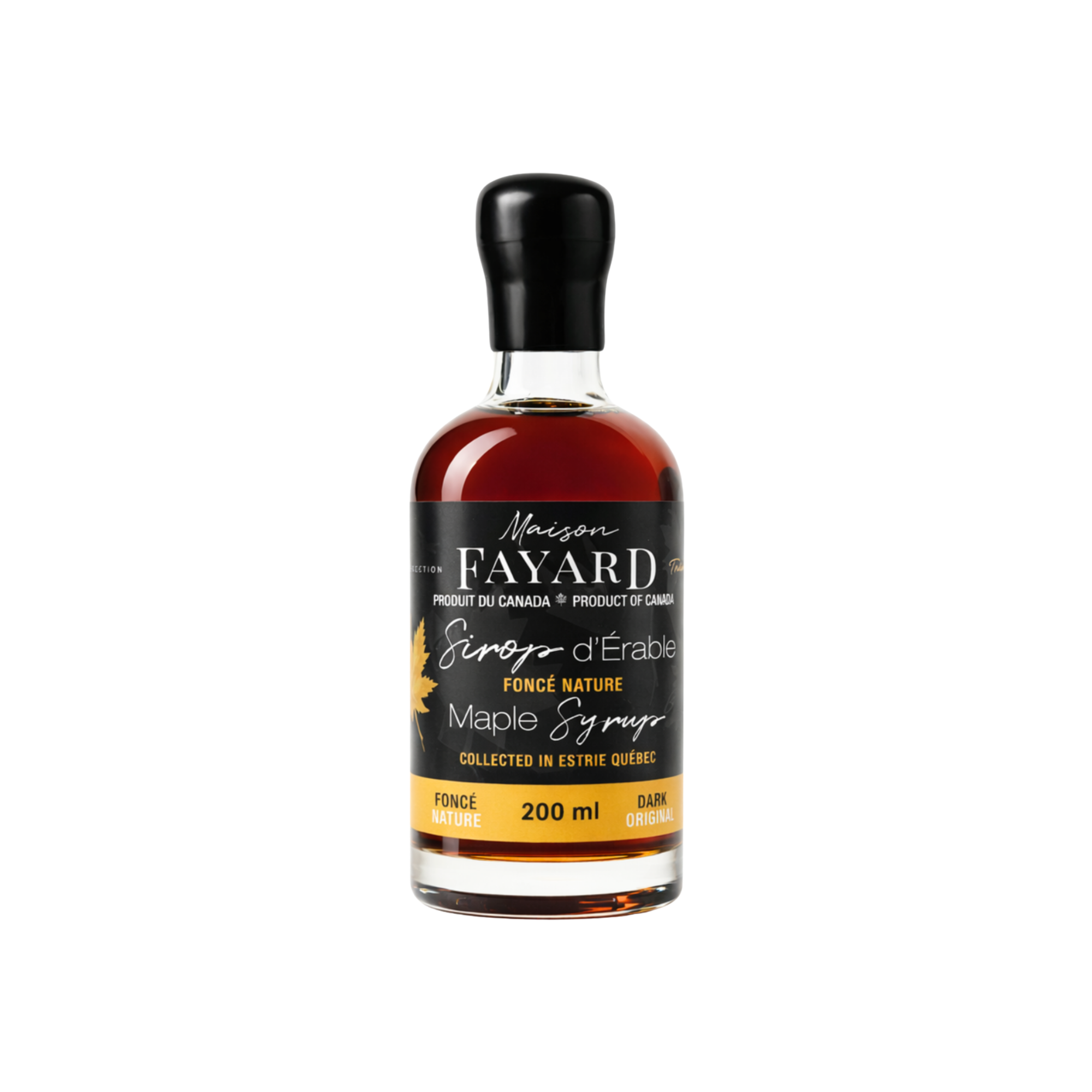
Dark syrup offers a robust taste and a colour close to café au lait. It stands up well to cooking and suits marinades and sauces.
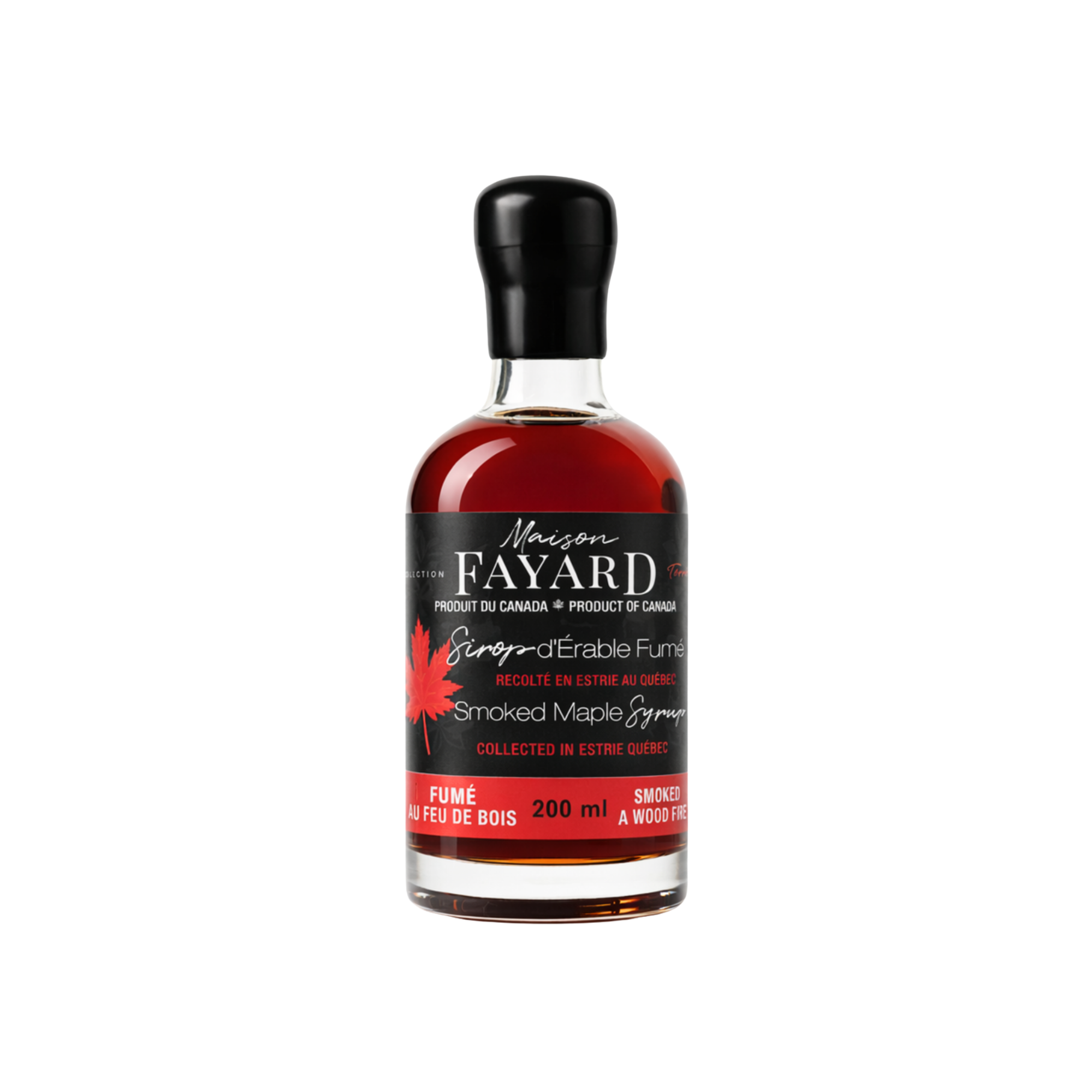
Very dark syrup, produced at the end of the season, is intense, almost smoky. It is often used in cooking for preparations where it needs to assert itself against powerful ingredients.
Canning, an essential final step
Once evaporation is finished, the syrup is filtered to remove natural impurities, then hot-packed. This pasteurization allows long-term storage without additives or preservatives. Pure maple syrup contains only one ingredient: concentrated maple sap.
Packaging ranges from small tasting bottles to large family sizes, including metal or glass containers. At Maison Fayard, the selected syrups come from artisanal sugar bushes whose traceability and operating practices are verified.
How to choose the right maple syrup?
The choice depends above all on the intended use and your sensitivity to sweetness.
For a pure tasting, alongside cheeses or fine charcuterie, a golden or amber syrup lets you appreciate all the aromatic subtlety without dominating the other flavours.
For baking and desserts, amber syrup is the safest choice: it brings roundness without being overpowering.
For marinades, sauces and savoury dishes, a dark or very dark syrup holds up better to cooking and asserts itself against powerful flavours.
For a first purchase or a gift, an amber syrup in a glass bottle remains the benchmark: accessible, elegant, and representative of the best Quebec produces.
Frequently asked questions
How long does the maple syrup production season last?
The sugaring season generally lasts between four and eight weeks, depending on the year's weather conditions. It usually takes place between late February and early April in Quebec.
Does maple syrup contain additives or preservatives?
No. Pure maple syrup contains only one ingredient: maple sap concentrated by evaporation. No added sugar, no colouring and no preservative is allowed in a certified pure product.
Why does the taste of maple syrup vary from one bottle to another?
The colour and taste depend on the time of the season when the sap was harvested, the year's weather conditions and the evaporation time. These natural variations are part of the product's artisanal character.
How to store a bottle of maple syrup properly?
An unopened bottle can be kept for several years at room temperature away from light. Once opened, it should be refrigerated and consumed within the following few months to preserve its aromas.